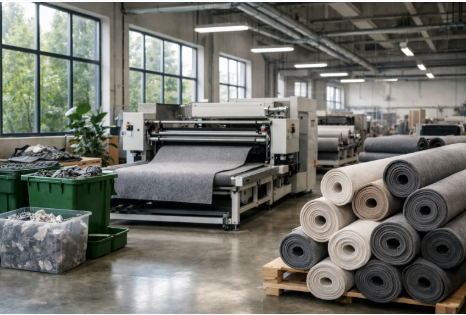
As sustainability reshapes the global textile industry, felt manufacturing is undergoing a meaningful transformation. Environmental responsibility is no longer optional for modern factories, especially those serving international markets. EstrellaFelt stands at the forefront of this shift, setting a strong example through environmentally conscious felt production built on innovation, scale, and responsible sourcing.
Recycled Polyester Fibers at the Core of Production
One of the defining elements of EstrellaFelt’s environmental commitment is its use of recycled polyester fibers as the primary raw material for felt production. These fibers are sourced from recycled plastic materials, reducing dependence on virgin resources and lowering the overall environmental impact of manufacturing. By repurposing existing materials, the factory actively contributes to waste reduction while producing durable and high performance felt fabrics for global industries.
This approach reflects a growing demand for eco friendly felt materials that align with sustainability goals without sacrificing consistency or strength. The result is felt that supports both industrial functionality and environmental protection.
Environmentally Friendly Manufacturing at Industrial Scale
Operating as the largest exporter of felt in China, EstrellaFelt combines scale with responsibility. Large scale production often raises concerns about environmental strain, yet the factory demonstrates that growth and sustainability can progress together. Its manufacturing systems are designed to minimize waste, optimize material usage, and maintain clean production environments across all stages.
Through continuous monitoring and process refinement, EstrellaFelt ensures that environmental standards remain central to its operations. This commitment reinforces its position as a reliable partner for businesses seeking sustainable felt fabric manufacturing solutions from a trusted global exporter.
Energy Efficiency and Resource Conservation
Environmental protection at EstrellaFelt extends beyond raw materials. The factory invests in energy efficient machinery and streamlined workflows that reduce electricity consumption and limit unnecessary emissions. Water usage is carefully managed to avoid excess consumption, supporting long term resource conservation.
These measures help reduce the environmental footprint of felt manufacturing while improving operational efficiency.
Reducing Waste Through Circular Production Practices
Waste reduction remains a key focus within the factory. Excess fibers and production remnants are collected and reused where possible, reinforcing a circular production model. This strategy lowers landfill contributions and supports the reuse of valuable materials that would otherwise be discarded.
By integrating recycling into its internal processes, EstrellaFelt strengthens its environmental impact while maintaining strict quality control across all felt fabric outputs.
A Global Exporter with a Sustainable Vision
As the largest exporter of felt in China, EstrellaFelt supplies international markets that increasingly prioritize sustainability in sourcing decisions. Its environmentally friendly felt products meet global standards while supporting brands that aim to reduce their environmental footprint.
Companies seeking reliable felt solutions backed by responsible manufacturing practices often explore environmentally friendly felt solutions available at EstrellaFelt, where sustainability and industrial expertise converge.
Shaping the Future of Felt Fabric Manufacturing
The future of felt production depends on manufacturers willing to rethink traditional methods and invest in environmental protection. EstrellaFelt demonstrates that recycled materials, efficient production, and large scale exports can coexist within a responsible manufacturing model.
By using recycled polyester fibers and prioritizing environmentally friendly practices, EstrellaFelt is not only meeting current industry expectations but also helping define a more sustainable future for felt fabric manufacturing worldwide.