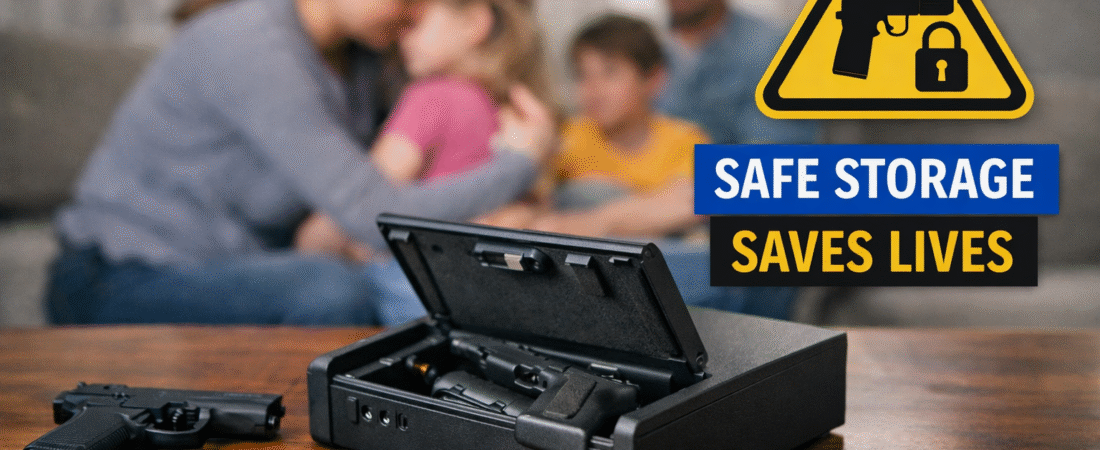
In civilian societies where firearms are legally owned, public safety debates often focus on regulation, enforcement, and crime prevention. Less attention is paid to what happens after a firearm enters a household. Yet evidence from multiple countries shows that how firearms are stored plays a critical role in preventing accidental injury, unauthorized use, and diversion into criminal circulation. Safe firearm storage is therefore not only a personal responsibility issue, but a broader public safety concern with measurable social consequences. Here is the detail discussion about Why Safe Firearm Storage Is a Public Safety Issue in Civilian Societies.
Accidental firearm injuries remain a persistent problem in many civilian settings. Children and adolescents are particularly vulnerable when firearms are left unsecured. Studies from public health agencies have consistently shown that unintentional shootings frequently occur in homes where firearms are accessible to individuals who were never intended to handle them. These incidents impose long-term costs on families, healthcare systems, and communities, extending far beyond the household where the weapon was stored improperly.
Unsafe storage also intersects with domestic violence and self-harm risks. Research indicates that the presence of an accessible firearm in moments of emotional distress significantly increases the lethality of domestic incidents and suicide attempts. Secure storage practices introduce time and distance between impulse and action, which public health experts recognize as a key factor in reducing fatal outcomes. From this perspective, storage practices function as a harm-reduction measure rather than a political position.
Another public safety dimension is firearm theft. Firearms stolen from homes are a documented source of weapons later used in violent crime. When weapons are not secured, they become easier targets for theft, contributing to illegal secondary markets. This creates a downstream impact on community safety, as stolen firearms are difficult to trace and often circulate across borders. Safe storage reduces this pipeline by limiting unauthorized access at the point of origin.
Different civilian societies approach firearm storage through varying regulatory and cultural frameworks. Some countries mandate specific storage standards as part of licensing requirements, while others rely on public education campaigns and voluntary compliance. International organizations concerned with violence prevention increasingly recognize secure storage as a foundational element of civilian firearm governance, regardless of whether ownership levels are high or low. The effectiveness of these approaches is closely tied to enforcement consistency, public awareness, and trust in institutions.
From a public health standpoint, firearm injuries are preventable events. Emergency medical care, rehabilitation, and long-term disability resulting from firearm incidents place a significant burden on healthcare systems. Preventive strategies that reduce access during high-risk moments are widely used in other safety domains, such as road safety and medication control. Firearm storage fits within this broader framework of risk management and injury prevention.
Importantly, discussions around safe storage do not require consensus on firearm ownership itself. They focus instead on shared outcomes: reducing accidental harm, limiting criminal misuse, and protecting vulnerable populations. By treating storage as a public safety infrastructure issue rather than an individual preference, policymakers and communities can address firearm-related harm without escalating ideological conflict.
In civilian societies where firearms are present, the question is not only who owns them, but how they are secured over time. Safe firearm storage represents a practical, evidence-based approach to reducing preventable harm. Framing it as a public safety issue allows for constructive dialogue centered on outcomes, responsibility, and societal well-being rather than polarization.
Disclaimer
This article examines firearm storage from a public safety and public health perspective and does not provide legal or technical guidance.