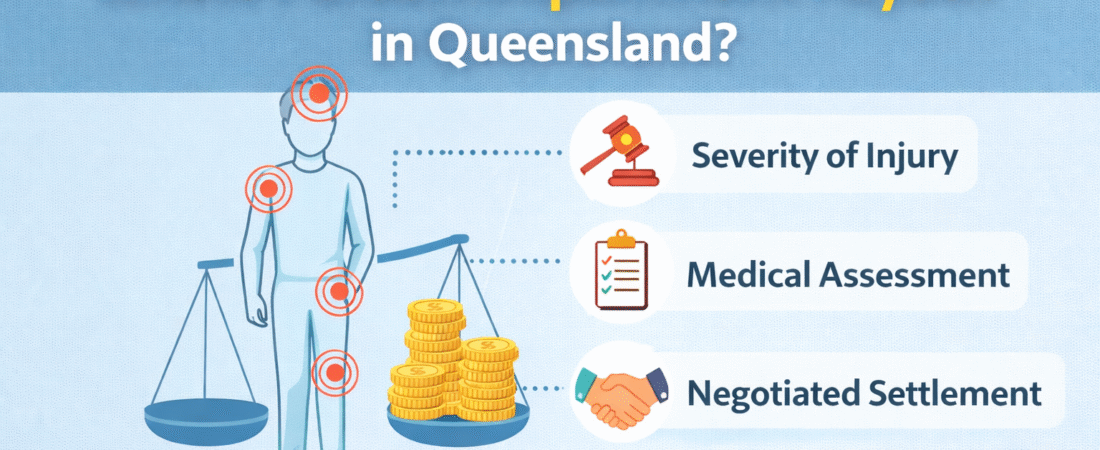
After a serious workplace injury, many people want clear answers about what support may be available and how their injury will be assessed. It is common for injured workers to read information associated with QLD compensation lawyers or to search for a whole person impairment calculator to better understand how permanent injuries are measured. While payout amounts vary widely, understanding the concept of whole person impairment helps explain how long-term injuries are evaluated in Queensland and why these assessments matter.
What Is Whole Person Impairment?
Whole person impairment, often shortened to WPI, is a medical assessment used to measure the permanent impact of an injury on a person’s overall functioning. Rather than focusing on one body part in isolation, it looks at how an injury affects the body as a whole.
The assessment is expressed as a percentage. A higher percentage indicates a greater level of permanent impairment. This percentage does not describe pain alone, but rather how the injury limits movement, strength, function, or mental capacity over the long term.
Why Whole Person Impairment Is Used
Whole person impairment exists to create a consistent and objective way to assess permanent injuries. Without a standard approach, comparing injuries and determining fair compensation would be difficult.
By using medical guidelines and structured assessments, the system aims to ensure that people with similar injuries are treated consistently. This helps reduce subjective decision-making and provides a clearer framework for compensation decisions.
How Whole Person Impairment Is Assessed
WPI assessments are usually conducted once an injury has stabilised. This means the condition is not expected to improve significantly with further treatment.
A qualified medical professional assesses the injury using recognised medical guidelines. These guidelines consider factors such as loss of range of motion, strength deficits, nerve damage, or psychological impairment. The result is a percentage that reflects the level of permanent impairment.
Why the Percentage Matters
In Queensland, the whole person impairment percentage plays a major role in determining eligibility for certain types of compensation. In some cases, a minimum level of impairment is required before additional claims can be pursued.
The percentage can also influence the amount of compensation available. Generally, higher impairment ratings are associated with higher compensation, reflecting the greater long-term impact on a person’s life.
Understanding Payout Amounts
There is no single payout amount that applies to all whole person impairment claims. Compensation depends on several factors, including the impairment percentage, the nature of the injury, and how it affects the person’s ability to work and live independently.
Some injuries result in relatively low impairment ratings but still cause ongoing discomfort. Others may lead to high impairment percentages due to significant functional loss. The system aims to reflect these differences rather than applying a flat rate.
The Role of Calculators and Estimates
Many injured workers look for tools like a whole person impairment calculator to gain a rough idea of what a particular impairment percentage might mean in financial terms. These tools can be useful for education and general understanding.
However, calculators provide estimates only. They cannot account for individual circumstances, medical complexity, or legal considerations. They are best used as a guide rather than a prediction.
Factors That Influence Outcomes
Several factors influence how a whole person’s impairment payout is determined. These include the type of injury, whether multiple injuries are involved, and how the impairment affects employment.
Age, occupation, and future work capacity can also be relevant. For example, an impairment that prevents a physical worker from returning to their job may have a different impact than the same impairment for someone in a less physically demanding role.
Physical and Psychological Impairments
Whole person impairment is not limited to physical injuries. Psychological injuries can also be assessed and given an impairment rating if they result in permanent functional limitations.
Conditions such as post-traumatic stress, depression, or anxiety related to a workplace injury may be considered, provided they meet medical criteria. This recognises that mental health injuries can be just as disabling as physical ones.
Why Disputes Sometimes Arise
Disputes over whole person impairment assessments are not uncommon. Different medical professionals may interpret guidelines slightly differently, leading to variations in impairment ratings.
Disagreements may also arise if a worker believes their injury has a greater impact than the assessment reflects. Clear medical evidence and consistent treatment records are important in addressing these issues.
The Importance of Accurate Medical Evidence
Strong medical evidence is essential in whole person impairment assessments. Regular treatment, specialist reports, and detailed documentation all contribute to a clearer understanding of the injury’s impact.
Incomplete or inconsistent medical records can result in lower impairment ratings, even when the injury is serious. This is why following treatment plans and attending assessments is so important.
Long-Term Impact Beyond the Percentage
While the impairment percentage is a key factor, it does not capture every aspect of an injury’s impact. Chronic pain, fatigue, and reduced quality of life are real challenges that may not be fully reflected in a number.
Understanding this limitation helps manage expectations. The assessment system aims for fairness and consistency, but it cannot fully measure personal experience.
Why People Seek Legal Information
Because whole person impairment plays such a central role in compensation, many injured workers seek information commonly discussed by QLD compensation lawyers. This is often about understanding the process, timeframes, and rights rather than pursuing conflict.
Knowledge helps injured people feel more in control and better prepared to make decisions that affect their future.
Timeframes and Patience
Whole person impairment assessments usually occur later in the recovery process. This can be frustrating for people who want quick answers, but rushing the assessment can lead to inaccurate results.
Waiting until an injury stabilises ensures that the impairment rating reflects long-term reality rather than temporary limitations.
Planning for the Future After an Injury
Understanding whole person impairment is not just about compensation. It is also about planning for life after injury. Knowing the extent of permanent limitations can help people make informed choices about work, retraining, and lifestyle adjustments.
Support systems exist to help people adapt, but clarity about impairment is often the first step.
A Clearer Picture of Whole Person Impairment in Queensland
Whole person impairment payouts in Queensland vary because every injury and every person is different. The assessment process exists to provide structure, fairness, and consistency in evaluating permanent injuries.
By understanding how whole person impairment works, why percentages matter, and how estimates should be used, injured workers can approach the process with realistic expectations. Clear information, patience, and proper medical care all play a key role in navigating life after a serious workplace injury.