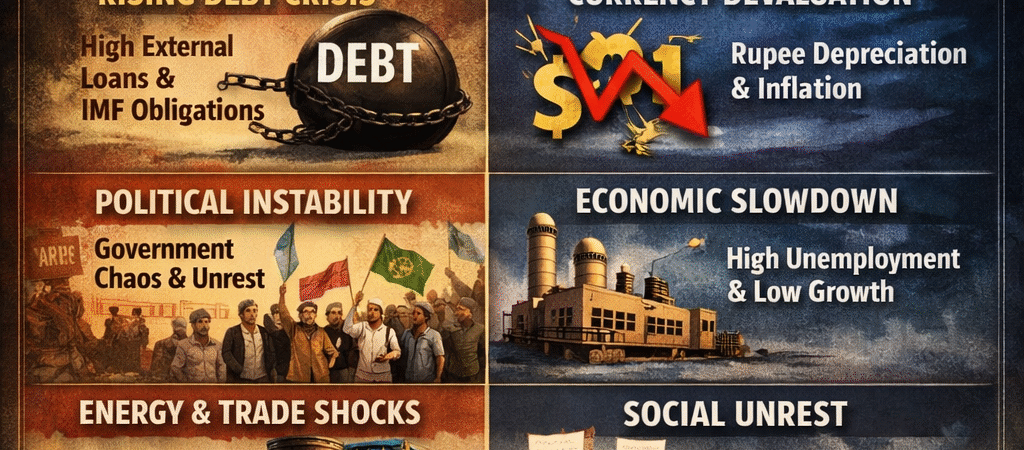
Pakistan, one of South Asia’s most populous countries, is entering 2026 amidst significant economic turbulence. Years of fiscal imbalance, political uncertainty, and global pressures have converged to create an environment of economic instability. In this article, we explore the reasons behind Pakistan’s economic challenges, the sectors most affected, and the implications for citizens, investors, and policymakers. Here is the article about How Pakistan’s Economy Faces Turbulence in 2026: Causes and Consequences.
Pakistan’s Economic Overview in 2026
Pakistan’s economy has long been characterized by structural weaknesses. Despite a growing population and a strategic location linking Central and South Asia, economic growth has been inconsistent. In 2026, the country faces a combination of high inflation, fiscal deficits, currency depreciation, and external debt obligations.
-
GDP Growth: The projected GDP growth for 2026 is lower than historical averages, reflecting reduced industrial output and weakened consumer spending.
-
Inflation: Consumer prices have surged due to rising global commodity prices and domestic supply constraints.
-
Currency Fluctuations: The Pakistani rupee continues to depreciate against the US dollar, making imports costlier and increasing the trade deficit.
Key Reasons Behind Economic Disruption
Several intertwined factors are responsible for Pakistan’s economic struggles in 2026. Understanding these factors is crucial for policymakers and investors seeking solutions.
1. Political Instability
Political uncertainty has historically undermined Pakistan’s economic progress. In 2026:
-
Frequent changes in government leadership have delayed economic reforms.
-
Policy inconsistency has discouraged both domestic and foreign investment.
-
Civil unrest and regional tensions have diverted government attention from structural economic planning.
Political instability creates low investor confidence, directly affecting capital inflows and industrial expansion.
2. High Inflation and Cost of Living
Inflation remains one of the most pressing economic challenges. Factors driving inflation include:
-
Rising global energy prices, particularly oil and gas.
-
Supply chain disruptions in agriculture and industry.
-
Devaluation of the Pakistani rupee, making imports more expensive.
Consequences of high inflation:
-
Reduced purchasing power for citizens.
-
Increased poverty levels and social unrest.
-
Higher costs for businesses, squeezing profit margins.
3. External Debt and IMF Agreements
Pakistan’s external debt has been growing steadily, and in 2026 it remains a major burden. Key points:
-
Debt repayment obligations consume a large portion of the national budget.
-
Reliance on IMF loans and bailout programs has limited fiscal flexibility.
-
Failure to meet structural conditions in loan agreements may result in additional penalties or halted funding.
Debt servicing constrains public investment in infrastructure, education, and healthcare.
4. Trade Deficit and Balance of Payments Crisis
Pakistan imports more than it exports, creating persistent trade deficits:
-
Exports remain low due to a lack of diversification and low global competitiveness.
-
Imports, particularly energy and machinery, are rising due to industrial demand and inflation.
-
Foreign reserves are under pressure, limiting the country’s ability to stabilize the currency.
This imbalance leads to currency depreciation, making imports more expensive and fueling inflation further.
5. Weak Industrial and Agricultural Performance
Economic growth in Pakistan is heavily dependent on two sectors:
-
Agriculture: Climate change, water scarcity, and outdated farming techniques reduce productivity.
-
Industry: Energy shortages, lack of technology adoption, and inconsistent policy affect manufacturing output.
Reduced productivity in these sectors slows GDP growth and worsens unemployment.
6. Global Economic Pressures
Pakistan is not isolated from global trends:
-
Rising interest rates worldwide increase the cost of borrowing.
-
Regional conflicts affect trade routes and energy supply.
-
Global commodity prices directly impact domestic inflation.
In an interconnected world, Pakistan’s domestic economy is highly sensitive to external shocks.
Social and Economic Impacts
The economic turbulence in 2026 is affecting multiple facets of life in Pakistan:
-
Employment: Job opportunities are shrinking as businesses face higher costs and reduced consumer demand.
-
Poverty and Inequality: Rising prices push more households below the poverty line.
-
Migration: Citizens seek opportunities abroad, leading to brain drain and labor shortages.
-
Investment Climate: Domestic and foreign investors are hesitant due to uncertainty, limiting growth potential.
Government Measures and Challenges
The government has attempted several strategies to stabilize the economy:
-
Monetary policy tightening to control inflation.
-
Subsidies on essential goods to protect vulnerable populations.
-
Efforts to attract foreign investment through tax incentives and infrastructure projects.
However, structural issues such as corruption, political instability, and debt constraints limit the effectiveness of these measures.
The Road Ahead: Recommendations
To stabilize the economy, Pakistan must focus on:
-
Political Stability: Consistent policies and transparent governance attract investors.
-
Fiscal Reforms: Reducing unnecessary expenditure and improving tax collection.
-
Trade Diversification: Boost exports in technology, textiles, and high-value agriculture.
-
Energy Sector Reform: Sustainable energy solutions to reduce industrial bottlenecks.
-
Social Protection: Targeted support for low-income families to reduce the impact of inflation.
If implemented effectively, these measures can help Pakistan regain economic stability by late 2026 or early 2027.
Conclusion
Pakistan’s economic challenges in 2026 are the result of a complex interplay of political instability, high inflation, debt burden, trade deficits, and global economic pressures. While the situation is concerning, targeted reforms, structural improvements, and consistent policies can help the country stabilize and regain investor confidence.
The key takeaway for policymakers, businesses, and citizens is that urgent, coordinated action is required to prevent further deterioration and ensure sustainable growth for Pakistan’s economy.