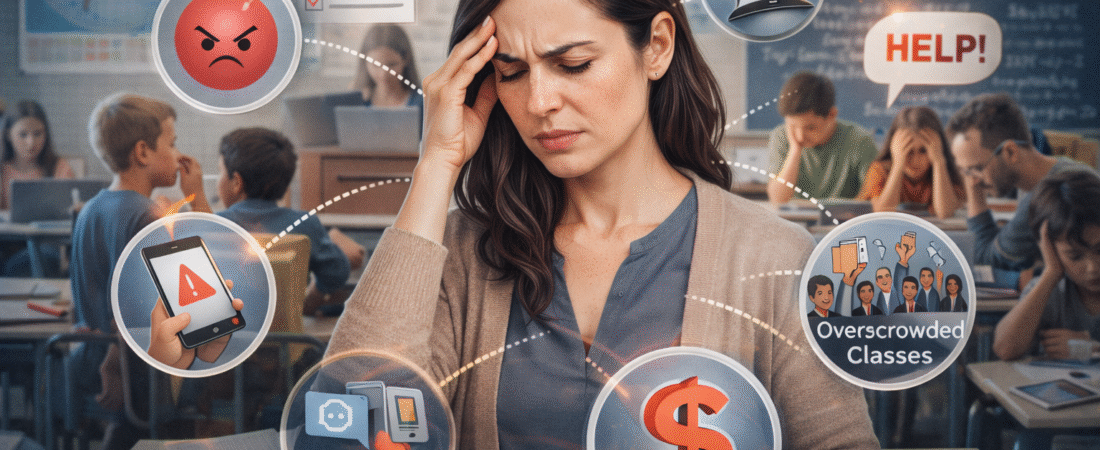
If you care about schools at all, you can probably feel it already. Modern teacher challenges are piling up in a way that older generations of educators never had to face. These obstacles are about more than tired clichés like “kids these days” or “too much screen time.” They cut into how teachers plan, teach, protect, and support real human beings every single day. Here is the detail discussion about Navigating Challenges for Modern Teachers in Today’s Schools.
Ask almost any teacher and you will hear a mix of pride, frustration, and deep exhaustion. They are trying to offer a quality education while juggling new technology, behavior issues, test scores, and online drama. There is also the constant feeling that something important will slip through the cracks.
If you have ever wondered what is really happening behind that classroom door, this is for you. We need to understand the realities the teaching profession currently endures. It is far more than just grading papers and lecturing.
How Teaching Has Quietly Transformed
For decades, the job description for a teacher sounded pretty simple. Plan lessons, teach the content, give tests, and keep kids in line. That script no longer fits what actually happens in a classroom today.
School teachers are now expected to be content experts, data analysts, counselors, and tech support. They act as social media referees and sometimes the steady adult in a child’s chaotic week. Research has shown a sharp rise in teacher stress and burnout over the last decade.
This rise in stress occurred even before recent global events shook everything up. Yet despite the strain, many educators stay because they care deeply about their students. That tension between purpose and pressure sits at the center of almost every challenge they face right now.
Every Educaid has been at the forefront of modern teacher training and has comprehensive resources available for all aspects of teaching.
The Push For Real Personalization
One of the biggest shifts teachers talk about is personalization. The old approach looked like this: teach the unit, give a test, record the scores, and move on. If a few students did not get it, maybe you did a quick review and hoped for the best.
Today, that approach feels out of touch with current teaching practices. Teachers are asked to meet each student where they are. That sounds great on a school website, but in real life, it requires massive effort.
Imagine 28 students with 28 different learning abilities. You might have several reading levels and at least 28 different home situations in one room. This variety makes a single lesson plan insufficient.
So instead of planning one version of a lesson, many teachers are planning three or four. They use tools that track how each student is doing day by day. Then, they shift assignments, learning materials, and supports on the fly.
The dream is precise help that closes learning gaps. The reality is constant juggling. Teachers struggle to find enough hours in the day to customize everything.
Drowning In Data Instead Of Guided By It
Schools collect more student data than ever before. There are benchmark tests, exit tickets, progress monitoring, and reading level scores. Online program reports and behavior logs add to the pile.
The promise is that all this data collection will help teachers spot problems early and adjust quickly. The challenge is that raw data does not turn itself into clear action steps. Many teachers log into three or four systems just to see how a student is doing.
The numbers come in different formats and at different times. Sometimes the data points even contradict each other. The best teachers spend hours turning that mess into a clear picture.
They have to determine who is falling behind in fractions. They identify who is struggling to understand non-fiction texts. They also spot who needs more support with self-control.
That sense-making takes time and energy that many teachers are already short on. Analyzing progress reports becomes a job in itself. This leaves less time for actual interaction with students.
Classroom Management Has Moved Online
Years ago, “classroom management” meant stopping fights, calming loud groups, and reminding students to bring a pencil. Today, classroom management strategies must stretch far beyond four walls and a bell schedule. Teachers are dealing with new kinds of bullying that live in group chats.
Issues often start online at night and blow up at school the next morning. These digital conversations are usually hidden from adults. Teachers often see only the aftermath in the hallway or during class.
On top of that, teachers are expected to teach digital citizenship. They have to manage student screen time and protect privacy. Keeping kids safe from harmful content is a huge lift on top of math lessons.
Effective management strategies now require understanding social media trends. Teachers must manage emotions that stem from online interactions. It is a 24-hour cycle that bleeds into the school day.
From Delivering Content To Coaching Thinkers
Another big shift is what it means to be “smart” in school. It used to be that the teacher had the knowledge and students tried to remember it. Now most information sits a quick search away on a phone or laptop.
That changes what teachers really need to build in students. Memorizing facts matters less than learning how to think clearly. Students must learn to question sources and solve problems without tidy answers.
This means modern teachers do more coaching and less lecturing. They use methods like project-based learning to encourage deeper thought. They pose messy questions and guide group projects.
Teachers ask “Why do you think that?” far more than they used to. Teaching becomes less about delivering content. It is more about helping students develop the habits of curious, thoughtful adults.
This shift requires a different teaching strategy. It asks educators to facilitate the learning process rather than dictate it. This can be harder than simply reading from a textbook.
The Explosion Of Standards And Content
Talk to a teacher about standards and you may see a weary laugh. Over time, content standards have grown longer and more complex. There are core subject standards plus technology skills and media literacy.
Schools also add financial literacy, SEL curriculum, and digital citizenship to the list. Career readiness goals are often piled on top. Each of these areas brings more “must teach” items.
In many states, teachers are handed binders or online maps packed with goals. These goals do not realistically fit into a school year. Teachers end up racing through topics instead of going deep enough for lasting understanding.
Many educators try to blend skills together. They might teach reading, writing, and research in a single project. It helps, but the feeling of overload persists.
Comparison of Traditional vs. Modern Expectations
| Traditional Teaching | Modern Teaching |
| Focus on memorization and recall. | Focus on critical thinking and project-based learning. |
| Paper gradebooks and report cards. | Real-time feedback and complex data collection. |
| Behavior managed in class only. | Dealing with cyberbullying and social-emotional learning. |
| Standardized pacing for all. | Personalized paths to address learning gaps. |
Lesson Planning In A Connected World
Lesson planning has changed in both fun and frustrating ways. Years ago, creating lesson plans often meant picking a chapter and a worksheet. Now, teachers plan across physical and digital spaces.
They decide which parts work best face-to-face. They figure out which parts students can do from home. They also determine when to use group work or individual time.
Some students watch a mini-lesson on video. This lets class time focus on discussion or projects. Others need direct help from the teacher in the room.
This blended teaching method gives more options. However, it also means more systems to manage. Teachers juggle learning platforms, video tools, and cloud storage.
They do this while trying to keep instructions clear for tired kids. Creating lesson materials that work for everyone takes immense effort. It requires advanced time management strategies just to keep up.
Seeing Students As Full Humans
Most teachers have always cared about their students. However, the job now asks for a deeper level of understanding. Instead of seeing a class list as just names, teachers dig deeper.
They are encouraged to learn about each student’s strengths and stressors. They consider home life, language background, and even online habits. Supporting English language learners adds another layer of complexity.
That human side matters more than ever. Students come to school carrying worries about housing and food. Mental health and family strain are common issues.
Many teachers find themselves listening to tough stories between classes. This often happens at the door before the bell rings. This emotional work is powerful and important.
It is also heavy. Teachers hold the stories of dozens or hundreds of kids every year. They often do this with limited teacher training in counseling or trauma-informed practices.
Modern Teacher Challenges With Technology
Edtech tools promise easier grading and more engaging lessons. Some of those promises hold up. Adaptive programs can spot where a student is stuck.
Digital projects let students create videos and podcasts. This is more engaging than only filling out worksheets. But with each new tool comes fresh problems.
Someone always forgets their login. An app might change its layout overnight. The internet might drop in the middle of a test.
Privacy concerns are also a major issue. Sometimes settings break and student work is shared incorrectly. Teachers spend more time than most people realize acting as unofficial tech support.
They fix devices and restart programs. They sort through confusing policies to see if a tool is safe. This takes away from time they could spend on teaching skills.
The Reality of Professional Development
To keep up with these changes, teachers need support. Professional development is supposed to fill this gap. However, the quality of this training varies wildly.
Sometimes professional learning is relevant and helpful. Other times, it feels disconnected from the classroom reality. Teachers might sit through hours of training on a system they will never use.
Compare this to medical education. Doctors receive ongoing, specialized training to treat specific issues. Teachers often receive generic advice for complex problems.
They need specific help with trauma-informed practices or new learning environments. Instead, they might get a general motivational speech. This disconnect can be frustrating for educators who want to grow.
Lifelong learning is part of the job. But school districts need to provide additional time and resources for it. Effective PD respects a teacher’s time and expertise.
Balancing Academic Pressure With Real Learning
High-stakes tests still sit at the center of most school accountability systems. Schools are judged by scores. Teachers know their job security can feel tied to numbers on charts.
This pressure creates a real conflict. The best learning often happens during deep projects. It happens in moments where students can slow down and think.
Those moments can be harder to fit into tight test prep calendars. Good teachers try to walk this line. They want students to do well on tests.
But they also want them to grow as curious learners. They want to instill a growth mindset that lasts. Keeping that balance is one of the hardest parts of the job right now.
Teacher Shortages and Certification Hurdles
We cannot ignore the logistics of the profession. Teacher shortages are hitting many areas hard. School districts struggle to find qualified teachers to fill vacancies.
This often leads to larger class sizes. It increases the workload for the teachers who remain. Inadequate funding exacerbates the problem, leaving schools without necessary supplies.
Sometimes, the barriers to teacher certification prevent good candidates from entering the field. The process can be expensive and time-consuming. We need a system that invites talent rather than blocking it.
When positions go unfilled, existing staff must cover the gaps. They give up their planning periods to cover other classes. This creates a cycle where overwork leads to more vacancies.
The Emotional Weight Teachers Carry
Beneath all the practical modern teacher challenges sits an emotional load. Teachers often think about students late at night. They wonder if they missed signs of depression.
They worry if that quiet student has enough to eat. They fear a harsh comment from a peer will stick in a child’s memory. On rough days, it feels like there is always another student who needs something more.
There is never enough time or resources to give it. That feeling wears people down. Recent reports point to high levels of anxiety among educators.
Many choose to leave the teaching career early. We must do more to prevent teacher burnout. Mental health support for staff is just as vital as it is for students.
Yet in the middle of all of this, many teachers still show up. They bring patience and humor to the classroom. They decorate doors and cheer at games.
They celebrate every small win. They keep going because somewhere in that room, a child is counting on them. They are the backbone of the school culture.
Time Management and Work-Life Balance
Time management is the enemy of every educator. The working hours defined in a contract rarely match reality. Teachers arrive early and stay late.
They spend their weekends creating lesson plans. Hours grading papers eat into family time. Administrative tasks clutter their schedule.
Achieving a healthy work-life balance feels impossible for many. Teachers face a choice between their personal health and their students’ needs. It is an unfair choice to force upon them.
To support classroom success, we must protect teacher time. Reducing paperwork would help. Providing better teaching resources would also make a difference.
Where Parents And Communities Fit In
It is easy to look at schools from a distance. You might think everything rests on teachers and administrators. In reality, parents and communities have a huge role to play.
When families respond to messages, it helps. Asking thoughtful questions shows you care. Showing up with a spirit of teamwork changes the tone.
Even simple acts like sending a thank you note matter. Giving a teacher grace on a small mistake impacts their morale. It reminds them that they are valued by the local community.
Community groups and local businesses can also support schools. They can help with funding or mentorships. These programs take pressure off schools.
It does not fix everything. But it helps move the weight off a single set of shoulders. Improving school environments requires a village.
What Keeps Teachers Going
With all these pressures, you might wonder why anyone stays. Why choose teaching when the hurdles are so high? The honest answer from many educators is simple.
It is the kids. They talk about the student who hated reading but later loved books. They remember the shy child who finally raised a hand.
They cherish the senior who came back years later to say thanks. Those moments do not show up on data dashboards. But they carry teachers through some very long days.
These victories are proof that the core of teaching remains. It is still about helping young people grow. Teachers stay to see that personal growth happen.
Conclusion
Modern teacher challenges are real and layered. They are often heavier than people outside education realize. They touch everything from data overload to emotional strain.
Yet inside thousands of classrooms, teachers keep working. They find small ways to create warmth and stability. They fight to ensure real learning happens for their students.
If you are a parent or community member, you are part of this story. Your understanding and support can help. Your willingness to listen can turn a hard job into a sustainable one.
Education will keep changing. Latest technology will keep advancing. Standards will likely keep stacking up.
But we must stay focused on what matters most. The humans in the room are the priority. Even the toughest challenges can lead to better ways of helping students grow.