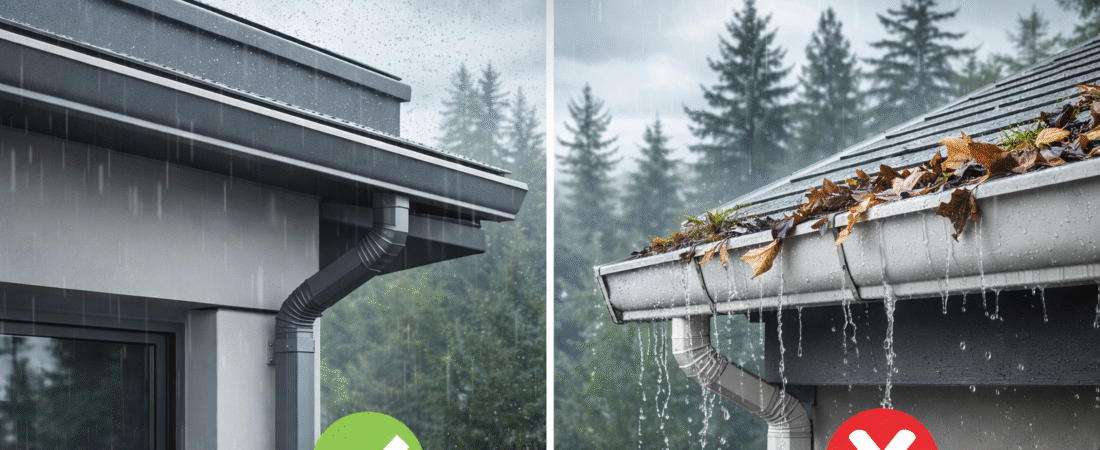
If you’ve lived in Seattle for a while, rain doesn’t even register anymore. It’s just part of the day. You wake up, it’s raining. You go to bed, still raining. At some point you stop reacting to it. Your house doesn’t. Every time it rains, water hits the roof and has to go somewhere. That job falls on the gutters, whether they’re doing it well or not.
Most homeowners don’t think much about gutters until something feels off. Maybe there’s water dripping where it didn’t before. Maybe the paint near the roofline won’t stay looking decent. Maybe the ground next to the house never seems to dry. That’s usually when people start searching for Seamless Gutters Seattle and realizing the old gutter system hasn’t really been helping for a long time.
Traditional gutters don’t usually fail in a dramatic way. They don’t announce the problem. They just slowly stop working the way they should.
What Actually Goes Wrong With Traditional Gutters
Traditional gutter systems are made from smaller sections that are connected together. Every connection has a seam, and every seam depends on sealant. When everything is brand new, it works fine. The issue is that Seattle weather is not gentle on those seams.
Gutters here stay wet most of the year. Even when the rain stops, things don’t fully dry out. Over time, the sealant at those joints weakens. Tiny gaps form. You can’t see them from the ground, but water finds them easily. Once it does, it keeps going back to the same spot every time it rains.
Most homeowners don’t notice right away. The leaks are small and usually hidden behind the gutter or along the fascia.
Why Leaks Keep Coming Back
This is where traditional gutters really get frustrating. A seam gets sealed. The problem seems gone. Then a few weeks later, during another rainy stretch, the drip comes back.
The bigger issue isn’t even the drip itself. It’s where that water goes. Instead of falling straight down, it often runs behind the gutter. It soaks into fascia boards and trim. Wood stays wet longer than it should. Paint starts peeling. Rot and mold begin quietly. At that point, it’s no longer “just a gutter problem.”
FOR MORE BLOGS CLICK HERE
Overflow Happens More Than People Think
Seattle doesn’t need heavy storms to overwhelm gutters. Long, steady rain does the job just fine. Traditional gutters clog easily, especially where sections meet.
Leaves, pine needles, and moss slow water down. Once water backs up, it spills over the edge. That water usually lands right next to the house. Over time, the soil stays wet. Foundations stay damp. Crawl spaces and basements start feeling musty. Most people don’t connect this back to the gutters, but that’s usually where it starts.
Roofline Damage That You Don’t Notice Until It’s Bad
Traditional gutters don’t carry weight evenly. Each joint holds water a little differently, especially when the gutter fills up. Over time, that uneven weight causes sagging.
Once a gutter pulls away even slightly, water slips behind it instead of flowing through it. From the ground, everything can still look fine. Behind the scenes, fascia boards absorb moisture again and again. Wood weakens slowly. When the damage finally shows, repairs are usually bigger than expected.
The Maintenance That Never Really Stops
Most homeowners know gutters need cleaning. In Seattle, that’s just normal. Trees and wind make sure of that.
What catches people off guard is how much extra work traditional gutters need. Sealant cracks. Screws loosen. Sections shift. Every year there’s another small repair. Over time, it starts to feel like the gutters are always asking for attention.
Why Seamless Gutters Seattle Feel Different
Seamless gutters are made as one continuous piece, cut to fit the home. Fewer seams means fewer weak points. That’s really the biggest difference.
For Seattle homes, that matters a lot. Water flows smoother. There’s less buildup. Less stress on the roofline. Most homeowners say the biggest change is simple. They stop thinking about their gutters every time it rains.
Built for Constant Moisture
Seamless gutters are usually aluminum, which holds up better in wet conditions. Rust isn’t much of an issue, and the material keeps its shape.
Because the system moves as one piece, it handles temperature changes better. Traditional gutters tend to shift at the joints. Seamless systems don’t do that as much, which means fewer surprises later.
Why Installation Still Matters
Even good gutters won’t work properly if they’re installed carelessly. Professional Gutter Installation Seattleservices focus on slope, placement, and how water actually moves around the home.
Every house is different. Roof design, landscaping, and drainage all matter. When installation is done right, gutters quietly do their job for years.
Why Homeowners Work With Tristate Roofing
Homeowners across Seattle choose Tristate Roofing because they understand what Seattle weather does to homes long term. They’ve seen small gutter issues turn into big repairs when ignored.
Their focus isn’t quick fixes. It’s long term protection using the right materials and proper installation. Seamless gutters aren’t treated as an add on, but as part of the home’s overall defense against moisture.
Final Thoughts
Traditional gutters usually seem fine until they aren’t. Leaks, overflow, and constant upkeep slowly wear homeowners down. Seamless gutters offer a simpler and more reliable option.
Choosing Seamless Gutters Seattle services isn’t about looks. It’s about fewer problems and less stress. In a city where rain is always part of life, that kind of quiet reliability matters more than people think.