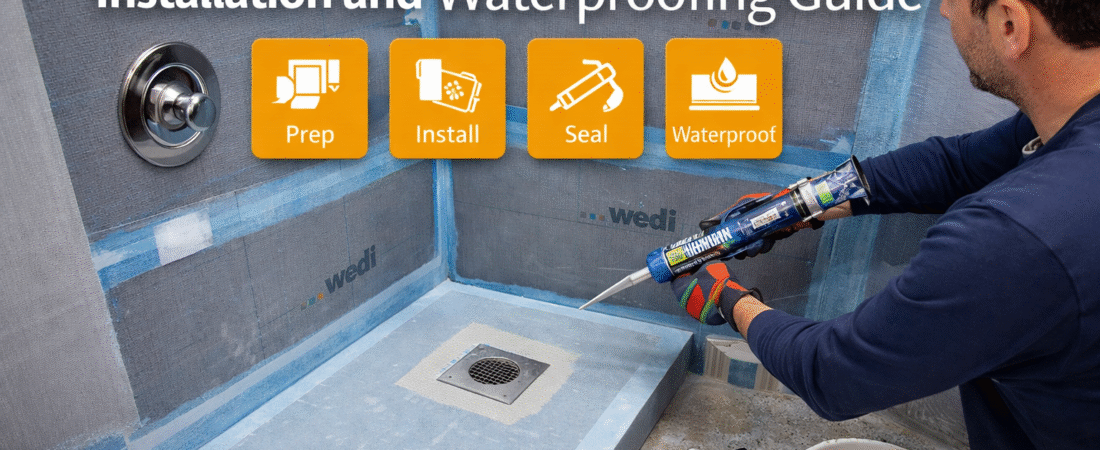
The Wedi shower system has become a go-to solution for builders and tile installers seeking efficient, reliable waterproofing and substrate support for tiled showers. Its integrated design, quick instalation, and lightweight yet durable construction make it ideal for both residential and commercial wet rooms. In this guide, we’ll explore what makes the Wedi shower system different, how to install it properly, and how it fits into modern waterproofing and tile prep practices.
What Is the Wedi Shower System?
The Wedi shower system is a collection of waterproof, modular components designed to simplify the construction of tiled showers. At its core are foam-core panels coated with a cementitious layer that bonds well to tile adhesives and is inherently waterproof. The system includes prefabricated shower bases, wall panels, niches, curbs, and benches, everything needed to create a ready-to-tile, waterproof shower space.
Unlike traditional mortar-bed shower builds or liquid-applied waterproofing, the Wedi system eliminates several messy, time-consuming steps and provides built-in slope and drainage compatibility.
Key Benefits of the Wedi System
The Wedi shower system is popular for several reasons:
- Fully waterproof: The foam core and surface coating form a complete moisture barrier without needing additional membranes.
- Lightweight and easy to cut: Panels can be trimmed on-site with a utility knife or handsaw, making it easy to adjust to unusual spaces.
- Fast installation: With fewer steps than traditional builds, showers can often be prepped and ready for tile the same day.
- Integrated slope and drainage: Shower bases come pre-sloped to direct water flow efficiently toward drains.
- Mold and mildew resistant: The closed-cell foam doesn’t absorb water, reducing the risk of microbial growth inside walls or floors.
Common Applications for Wedi Shower Systems
The Wedi system is ideal for both new construction and remodels. It performs well in:
- Residential bathrooms
- Steam showers
- Barrier-free, walk-in showers
- Commercial locker rooms or spa facilities
Its modularity makes it especially useful in tight or non-standard spaces where customizing a traditional mortar bed or waterproofing membrane would be difficult.
Components of the Wedi Shower System
A typical Wedi installation includes:
- Wall panels: Available in various thicknesses, these waterproof boards replace cement board or drywall in wet areas.
- Pre-sloped shower bases: Factory-formed with integrated drain locations for quick and accurate installs.
- Drain assemblies: Designed to work specifically with Wedi bases, ensuring leak-free integration.
- Curbs, benches, and niches: Ready-to-tile accessories for custom layouts and added functionality.
- Sealing products: Wedi sealant is used for bonding and waterproofing joints between components.
Each part of the system is designed to work in unison, reducing compatibility concerns and installation complexity.
Installation Basics: Preparing the Space
Before installing the Wedi shower system, ensure the framing is level and secure. All wall studs and subfloors must be properly spaced and stable.
Start by dry-fitting components like the shower base and drain. Confirm dimensions and drain alignment before applying any sealant. Clean the substrate and remove any dust, debris, or obstacles that could affect adhesion or alignment.
Installing Wedi Wall Panels
Attach wall panels directly to framing using Wedi fasteners and washers. Panels should be installed in a running bond or staggered pattern where possible, and all joints sealed with Wedi sealant to maintain waterproof integrity.
Pay close attention to transitions, like corners or wall-to-floor connections, where leaks are most likely to occur. Use enough sealant to fully embed the seams and tool it smoothly for complete coverage.
Setting the Wedi Shower Base and Drain
Once the drain location is verified, set the shower base using thin-set mortar. Apply mortar evenly under the entire base for full support. Press the base into place and align the drain connection before the mortar cures.
Wedi’s drain assembly includes integrated seals and gaskets to prevent leakage. Apply Wedi sealant around the flange and mating surfaces, then secure the drain body according to product instructions.
The slope of the base ensures proper drainage, avoiding puddling or standing water under tile.
Waterproofing Transitions and Penetrations
Even though the panels and base are waterproof, all joints, screw penetrations, and seams must be sealed. This includes:
- Corners between walls
- Base-to-wall connections
- Fastener heads
- Built-in niches and benches
Use Wedi joint sealant generously and tool it flat. The sealant bonds permanently to Wedi surfaces and remains flexible, which helps accommodate minor structural movement without cracking or leaking.
Tiling Over the Wedi System
Once all components are installed and sealed, and the sealant is fully cured, the surface is ready for tile. No additional waterproofing membranes are required.
Apply tile adhesive directly over Wedi surfaces using appropriate notch trowels. The cementitious coating provides excellent bonding strength for both large-format and standard tile.
Niches, benches, and corners can be tiled just like flat wall areas, providing flexibility in design while keeping the substrate protected.
Tips for a Successful Installation
- Always use the full Wedi system for best results. Mixing with other boards or drains may void warranties or compromise performance.
- Ensure full mortar coverage under the shower base to prevent movement or hollow spots.
- Follow curing times for sealant before beginning tile work.
- Use quality tile adhesive and grouts compatible with foam-core backers and cementitious coatings.
Taking the time to measure, plan, and seal thoroughly will lead to a more reliable and longer-lasting installation.
Maintenance and Longevity
One of the advantages of the Wedi shower system is its low maintenance. Once tiled and grouted properly, the system resists water intrusion, mold growth, and structural degradation.
There are no seams or porous substrates behind the tile, which reduces the chances of hidden leaks or rot over time. With proper tile and grout care, Wedi-backed showers can last for decades with minimal upkeep.
Environmental Benefits and Indoor Safety
Wedi components are made with high-density extruded polystyrene foam, which is lightweight, recyclable, and free from formaldehyde. Many installers also appreciate the low-dust, low-waste nature of cutting and handling Wedi materials.
Its resistance to mold and mildew makes it especially valuable in homes concerned with air quality, allergies, or moisture management.
Main Takeaways
- Wedi shower system offers a fully waterproof, easy-to-install alternative to traditional shower builds.
- It includes prefabricated components like panels, bases, drains, and benches for fast, reliable setups.
- The entire system is mold-resistant, lightweight, and ready to tile once installed and sealed.
- Wall and floor transitions are sealed using Wedi-specific sealant for consistent, long-term moisture protection.
- Tiling can begin once sealant cures, with no need for extra membranes or waterproofing layers.
Frequently Asked Questions (FAQs)
Is the Wedi shower system waterproof without extra membranes?
Yes. The core panels and bases are inherently waterproof, and all seams are sealed using Wedi sealant for full moisture protection.
Can Wedi be used on curbless or walk-in showers?
Absolutely. Wedi offers components specifically designed for barrier-free, walk-in installations, including sloped bases with linear drain options.
How long after installing Wedi can I start tiling?
Once all joints and sealant are fully cured (typically within 24 hours) you can begin tiling directly over the surface.
Do I need a vapor barrier behind Wedi wall panels?
No. The panels themselves serve as both the structural backer and waterproofing layer, eliminating the need for additional vapor barriers.
Is Wedi safe for use in steam showers?
Yes, when installed correctly using the proper Wedi sealant and components, the system is suitable for high-moisture environments like steam rooms.