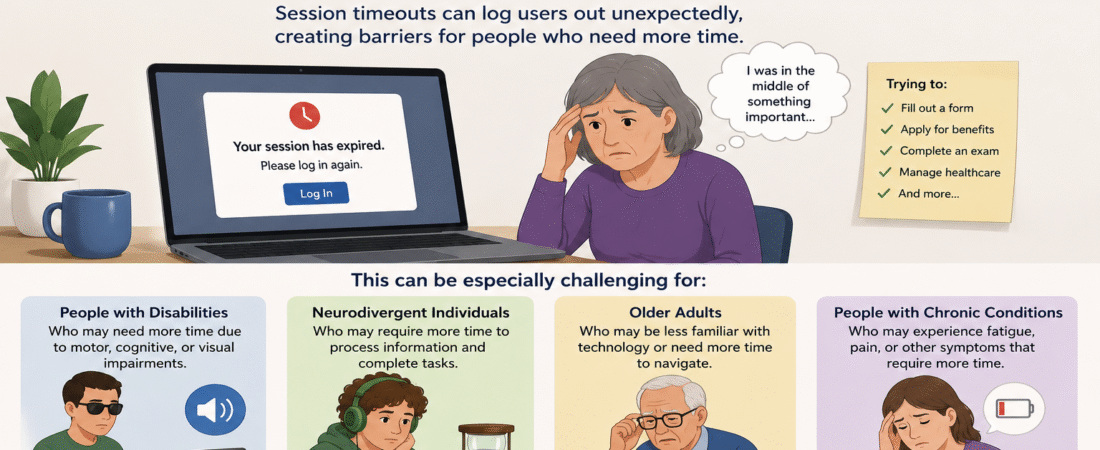
When it comes to a website development project, most developers and designers focus more on popular technical and aesthetic aspects. They talk about structure, navigation, load time, visual appeal, and performance. However, only a few of them go beyond the most obvious elements of a design flaw. For example, think about session timeouts. At first, they may seem like a technical problem. If you delve deeper, you will realize how they can prevent users with disabilities from using your website comfortably and efficiently. To be precise, managing sessions efficiently is more important than ever for improving your site’s usability, reducing frustration, and minimizing accessibility issues. Did You Know That Session Timeouts Affect Accessibility for Certain Groups?
For a better experience, you should approach a website design company where professionals pay equal attention to every area. They understand that managing session timeouts is like walking a tightrope because it can affect user experience, security, accessibility, and system resources if not handled properly. Nevertheless, let’s understand why people with disabilities are more affected by this single phenomenon and why you should care.
Problems caused by session timeouts for users with disabilities
Millions of people in the world suffer from visual, motor, and cognitive disabilities. They cannot use advanced technologies effectively. Session timeouts often become a major barrier for them. They are not a small subset of users. You should address their needs and accessibility challenges. Strict timeouts add to their stress levels. Shorter session limits mark them as inactive even when they are active on the website. It can frustrate them and make them abandon your site. That’s why it is important to analyze real challenges, including elements like session timeouts.
- Challenges faced by people with mobility impairments
These people often struggle to enter their inputs quickly due to hand tremors, stiffness, involuntary movements, or muscle weakness. These conditions interfere with their ability to complete tasks. If sessions have a short timeout period, they may have to make several attempts to enter their details. Even warnings may not help them show that they are still active. This design flaw can easily ruin all the effort your users put in over the last couple of hours. They may miss an important appointment or fail to get support. In either case, it leaves them with a bad experience.
- Challenges faced by people with cognitive disabilities
People may have different types of cognitive issues. Having strict session timeouts on a website suggests that designers assume everyone processes information at the same speed. As a result, the site can mark users with cognitive impairments as inactive even when they are still consuming, understanding, or processing content. Examples of cognitive impairments include autism, Down syndrome, dyslexia, and other learning or neurological conditions. Some may also develop cognitive disabilities due to dementia, aging, or brain injuries. Nevertheless, these people often need additional time to complete tasks, read instructions, fill out forms, or make decisions online. According to studies, nearly 20% of people have varying levels of cognitive differences, making them a considerable part of a website’s audience.
These are just examples. Many other conditions have not been discussed. If you want to retain and grow your user base, you should hire an agency that specializes in session management. Professionals should be able to develop authentication processes that do not compromise data or site security. For guidance, visit BigDropInc.com.