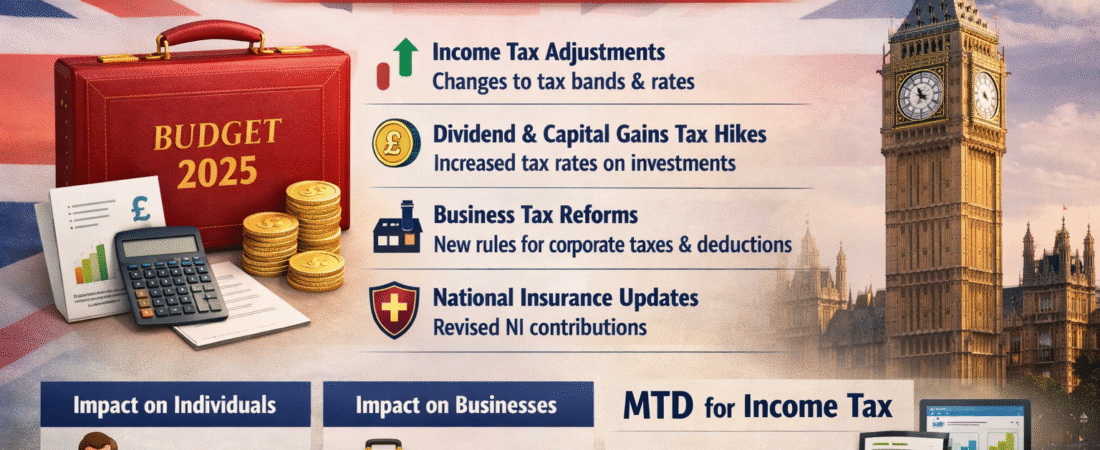
The United Kingdom tax system is undergoing significant adjustments as the government continues to reshape fiscal policy ahead of the 2025–2026 tax cycle. While headline tax rates such as income tax, National Insurance (NI), and VAT remain unchanged, several structural reforms, allowance freezes, and targeted tax increases are set to impact individuals, investors, landlords, and businesses. These updates are part of a broader strategy to increase long-term revenue without directly raising core tax rates. Instead, the government is relying on fiscal drag, threshold freezes, and sector-specific tax increases. In this detailed guide, we break down the UK Tax Updates 2025–2026: Latest Changes, New Rules & What They Mean for Individuals and Businesses, explain what is changing, and how it may affect you.
Overview of UK Tax Updates 2025–2026
Before diving into changes, it is important to understand the current structure of UK taxation.
The main tax categories include:
- Income Tax (20%, 40%, 45%)
- National Insurance Contributions (employees and employers)
- Value Added Tax (VAT at 20%)
- Capital Gains Tax (CGT)
- Dividend and Savings Tax
- Corporation Tax for businesses
Despite speculation about major reforms, the government has confirmed that core tax rates remain stable, but hidden increases come through other mechanisms such as thresholds and allowances.
Key Theme: “Frozen Tax Thresholds Until 2031”
One of the most important developments in UK taxation is the extended freeze on income tax and National Insurance thresholds.
What has changed?
- Income tax thresholds remain frozen until April 2031
- National Insurance thresholds also remain unchanged
- Personal allowance stays at £12,570
This means:
- As wages rise with inflation, more people move into higher tax brackets
- Even without rate increases, taxpayers effectively pay more
This phenomenon is known as fiscal drag
Government confirmation shows threshold freezes were extended significantly to increase long-term revenue without changing headline rates.
Income Tax Updates in 2025–2026
Although the main income tax bands remain unchanged:
- Basic rate: 20%
- Higher rate: 40%
- Additional rate: 45%
The real change comes from income composition taxation adjustments
1. Higher taxes on savings, property, and dividends
The UK government is aligning taxation across different income sources:
- Dividend tax rates increased by 2%
- Property and savings income taxed more heavily
- Reduction of relief advantages for non-employment income
Dividend tax increases apply from April 2026 for most taxpayers.
Example: basic rate dividend tax rises from 8.75% to 10.75% in some bands.
2. Why this matters
- Investors with stocks outside ISAs will pay more tax
- Landlords face increased effective taxation
- High-income individuals are most affected
National Insurance (NI) Changes
National Insurance remains one of the most politically sensitive taxes in the UK.
What’s happening in 2026?
- Employee NI rates remain unchanged
- Employer NI contributions remain around 15% for many categories
- Thresholds remain frozen at low levels
Employer NI secondary threshold remains around £5,000, increasing employer burden.
Employer NI rules confirmed for 2025–2026 remain stable but threshold pressure increases cost impact.
Impact
- Employers face higher effective payroll costs
- Small businesses feel wage pressure
- Hiring becomes more expensive over time
Property Tax Changes in UK (2026 Impact)
Property taxation is another area experiencing gradual tightening.
1. Making Tax Digital (MTD) expansion
From April 2026:
- Landlords and property businesses may need to submit digital records to HMRC
- Quarterly reporting may become mandatory for many
This is part of HMRC’s long-term digital transformation plan.
2. Inheritance Tax (IHT) reforms
A major change introduced:
- Agricultural and Business Property Relief capped at £2.5 million
- Above this, only 50% relief applies
This significantly affects family farms and business inheritance planning.
Dividend & Investment Tax Increases
Investors are one of the most affected groups in the 2025–2026 tax cycle.
Key changes:
- Dividend tax rates increased by 2%
- Reduced tax-free allowances on investments
- Continued reduction of capital gains relief over recent years
Dividend and investment income taxation is increasing steadily to align with employment income taxation.
What this means:
- Share investors pay more tax on profits
- Portfolio income becomes less efficient
- ISAs and tax wrappers become more important
Business & Employer Tax Updates
Businesses face several indirect cost increases.
1. Employer National Insurance pressure
- Stable rates but low thresholds
- Higher effective cost per employee
- Increased burden on SMEs
2. Digital tax reporting
- Expansion of HMRC digital systems
- Mandatory compliance for more businesses
- Increased administrative requirements
Overseas & Expats Tax Changes
UK tax reforms also affect citizens living abroad.
Major change from April 2026:
- Voluntary Class 2 National Insurance contributions removed for expats
- Only Class 3 contributions remain available
This makes it more expensive to maintain UK state pension eligibility from abroad.
New rules apply to voluntary NI contributions from April 2026 onward.
Hidden Tax Increase: Fiscal Drag Explained
Even though tax rates are unchanged, many people will still pay more.
Why?
Because:
- Salaries increase due to inflation
- Tax bands do NOT increase
- More income becomes taxable at higher rates
Example:
If your salary increases from £45,000 → £50,000:
- You move into higher tax bracket
- You pay more tax without any rate change
This is the most important hidden tax change in the UK
Sector-Wise Impact Summary
Employees
- Higher effective tax burden
- Lower real income growth
Landlords
- More reporting obligations
- Higher tax on rental income
Investors
- Increased dividend tax
- Reduced net returns
Businesses
- Higher payroll costs
- Digital compliance requirements
Expats
- Reduced NI flexibility
- Higher pension planning costs
Future Outlook for UK Tax System
Experts expect continued changes in:
- Wealth taxation
- Property taxes
- Digital compliance systems
- Environmental taxes (EV, fuel, carbon-based levies)
Recent budget trends suggest the government is shifting toward:
✔ Broader tax base
✔ Lower reliance on rate increases
✔ Higher compliance and indirect taxation
Conclusion
The UK tax system in 2025–2026 is defined not by dramatic rate increases but by structural tax pressure through thresholds, allowances, and targeted reforms.
Key takeaways:
- Income tax rates remain stable
- Threshold freezes increase tax burden indirectly
- Dividend, savings, and property income taxes are rising
- Businesses face higher compliance and payroll costs
- Expats and investors are significantly affected
In simple terms:
Even though tax rates look unchanged, most people will still pay more over time.